
Rand’s Resilience Currently Being Tested as Oil Surges and Commodity Support Fades
Global markets have entered a phase of relative calm, but this stability appears increasingly fragile. The ongoing US–Iran conflict continues to shape the macro landscape, primarily through elevated oil prices and shifting interest rate expectations. While financial markets have shown resilience, underlying pressures are building — particularly for emerging market currencies such as the South African rand.
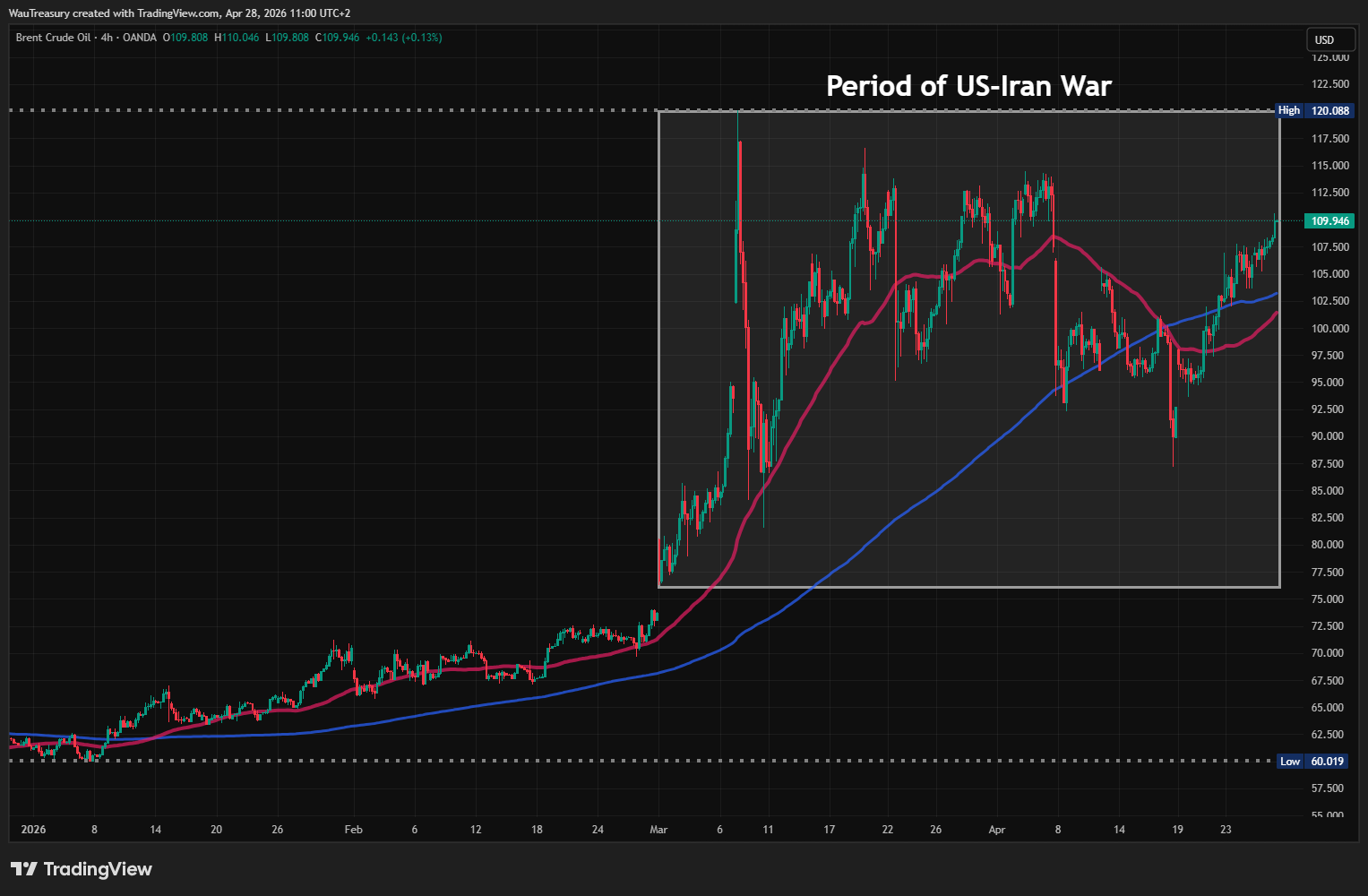
The dominant theme over the past month has been the sustained rise in oil prices. Brent crude has rebounded sharply toward the USD 110/BBL level at the time of writing, driven by a renewed geopolitical risk premium linked to disruption risks in the Strait of Hormuz. With US–Iran negotiations showing limited progress and recent proposals failing to gain traction, the market is increasingly pricing in a prolonged period of supply uncertainty.
Brent Crude Oil: Geopolitical Risk Premium Drives Sharp Repricing
Despite this, broader markets have displayed notable resilience. US equity indices continue to trade near record highs, while volatility has moderated. This reflects a growing sense of “conflict fatigue,” where markets are reacting less aggressively to repeated geopolitical developments and instead refocusing on earnings and central bank policy.
However, beneath this calm, a more important shift is underway. Rising oil prices are reintroducing inflationary pressure into the global system. Bond yields have edged higher as markets reassess the likelihood of near-term rate cuts, reinforcing a “higher-for-longer” interest rate narrative. This is particularly relevant for emerging markets, where tighter global financial conditions tend to weigh on capital flows.
For South Africa, the implications are more acute. As a net importer of oil, elevated crude prices feed directly into inflation expectations and external balances. This creates a challenging macro backdrop, particularly when combined with already high domestic interest rates and subdued economic growth.
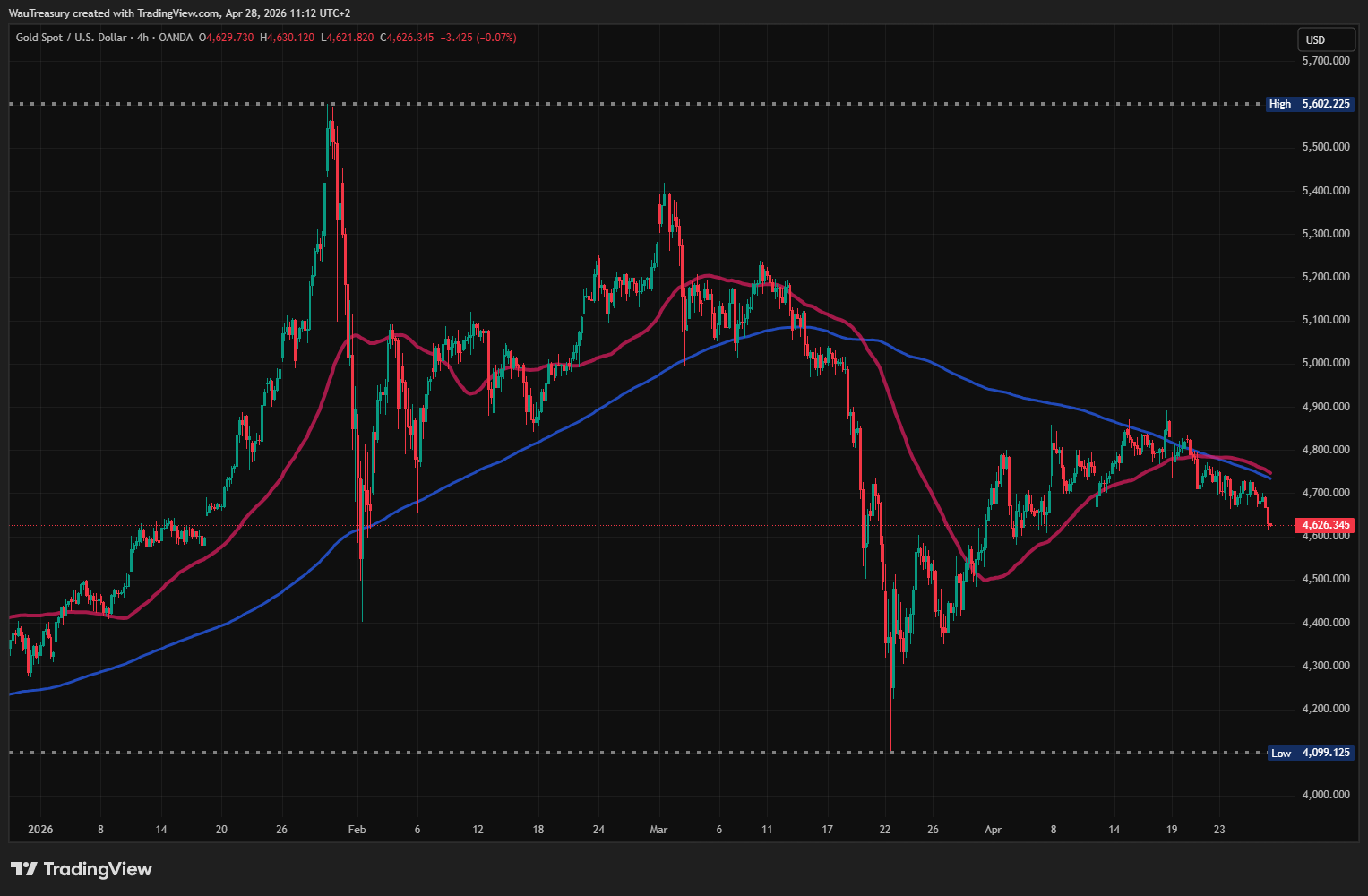
Historically, the rand has found support from strong precious metal prices — particularly gold and platinum. However, recent price action suggests that this support is beginning to fade.
Gold: Safe-Haven Demand Peaks as Momentum Begins to Stabilise
Platinum: Weakening Momentum Signals Fading Support for the Rand
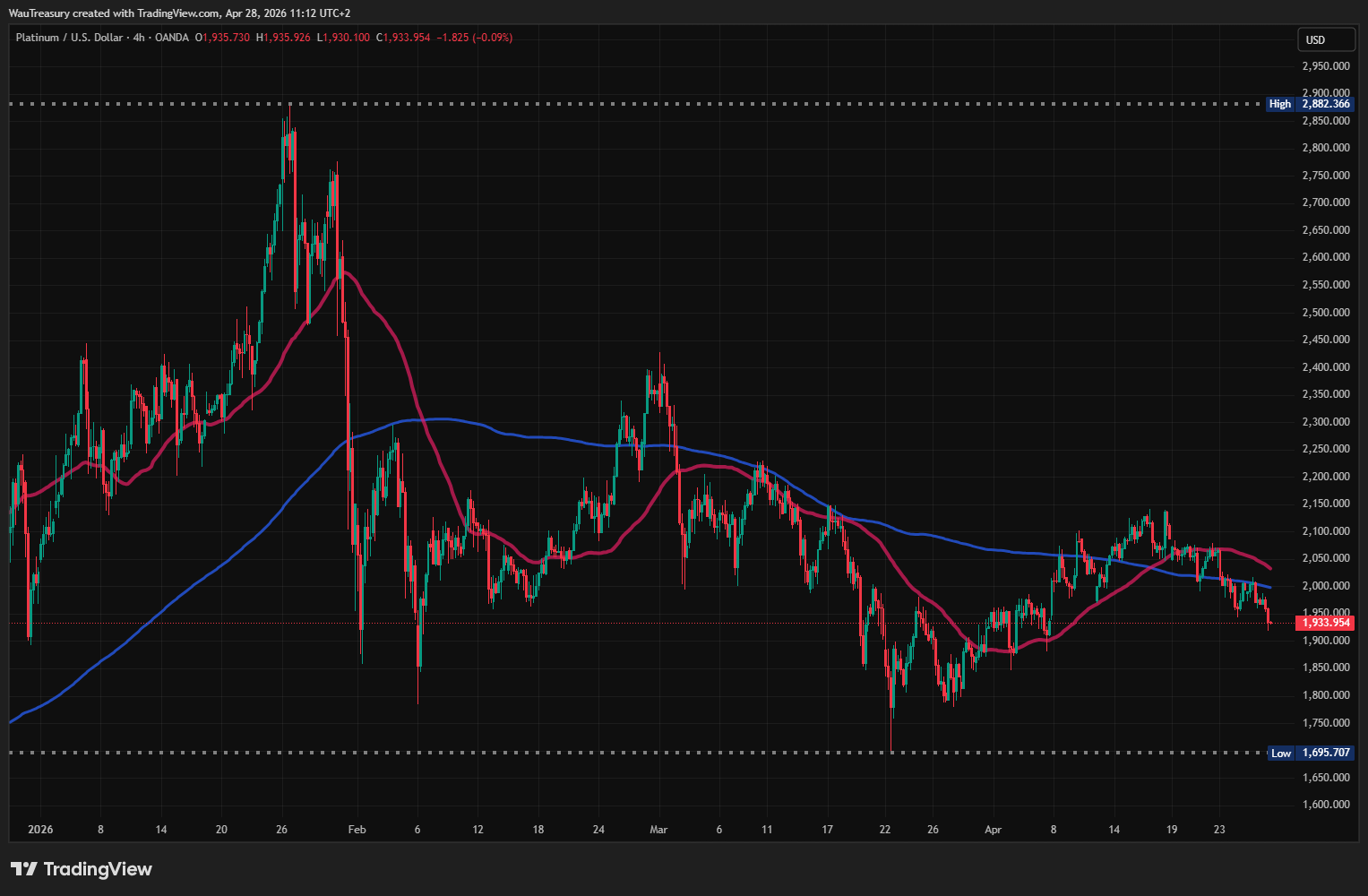
While gold initially benefited from safe-haven demand during the escalation of geopolitical tensions, momentum has since begun to fade. The metal has struggled to sustain upward traction as rising yields and a firmer US dollar reduce its relative appeal. Platinum — more closely tied to South Africa’s export profile — has shown a clearer loss of momentum, trending lower in recent sessions. This divergence is important, as it suggests that the traditional commodity support underpinning the rand is weakening at a time when oil-driven pressures are intensifying.
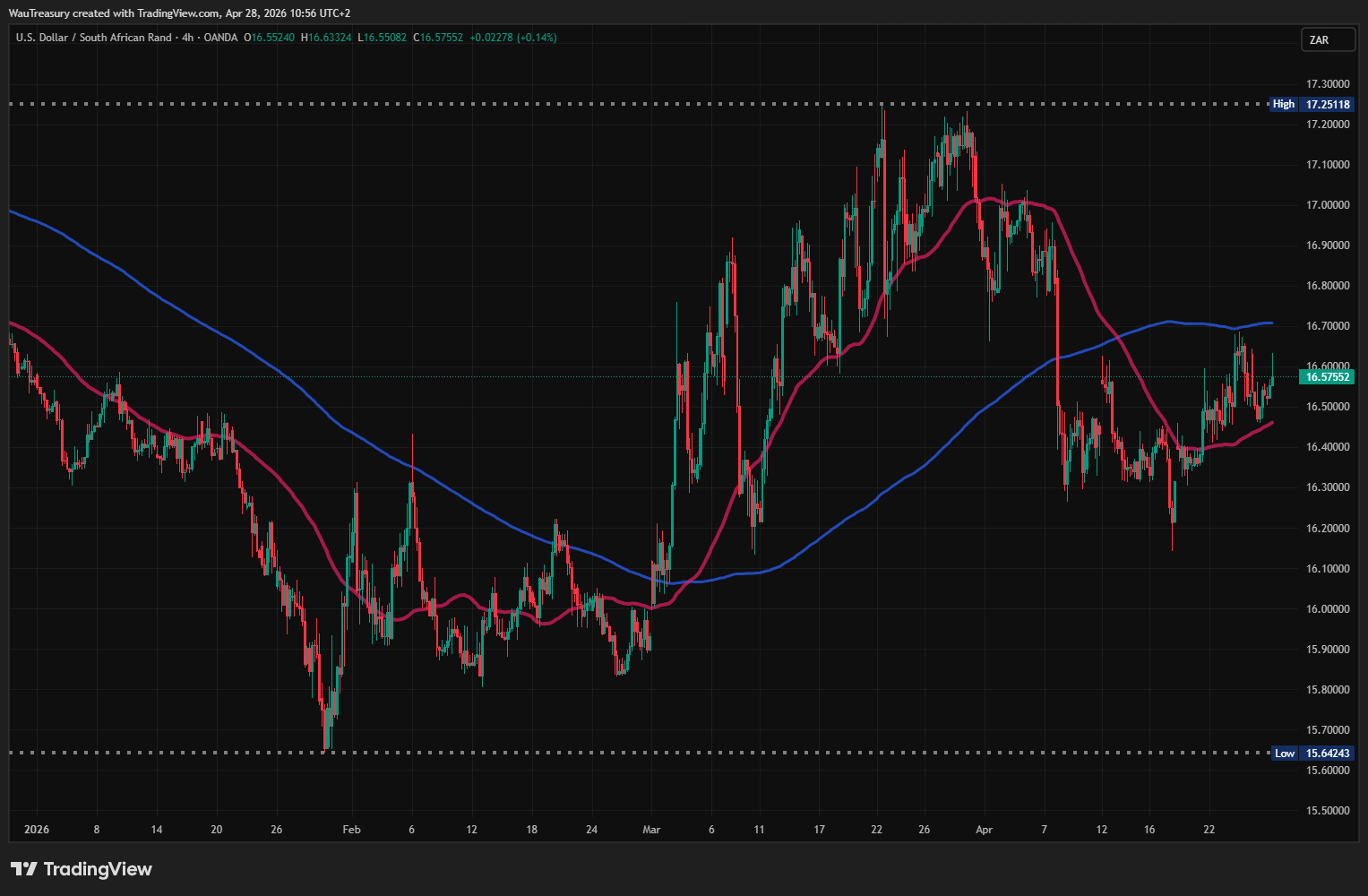
Against this backdrop, the rand’s performance has been relatively resilient. USD/ZAR has remained contained around the mid-16.50 range, despite the sharp rise in oil prices. Historically, oil-driven shocks have resulted in periods of rand weakness, suggesting that the current stability may not fully reflect underlying pressures at this stage. More time will be required to fully assess the medium-term impact of the war and the surge in global oil prices.
USD/ZAR: Rand Relatively Contained Despite Rising External Pressures
wautreasury maintains a more cautious stance on the rand. Its recent resilience has been driven by the earlier rally in precious metals, favourable carry-trade dynamics, and improving sentiment around South Africa’s fiscal outlook and governance. These supports are now beginning to fade, leaving the rand increasingly exposed to shifts in global risk sentiment and tighter external liquidity conditions.
From a global perspective, the environment is becoming less supportive. Should markets shift more decisively into a risk-off phase — driven by further geopolitical escalation, sustained oil price strength, or tighter global liquidity — emerging market currencies are likely to face renewed pressure. Notably, the rand’s sensitivity to global risk dynamics means it may weaken even in scenarios where the US dollar itself softens.
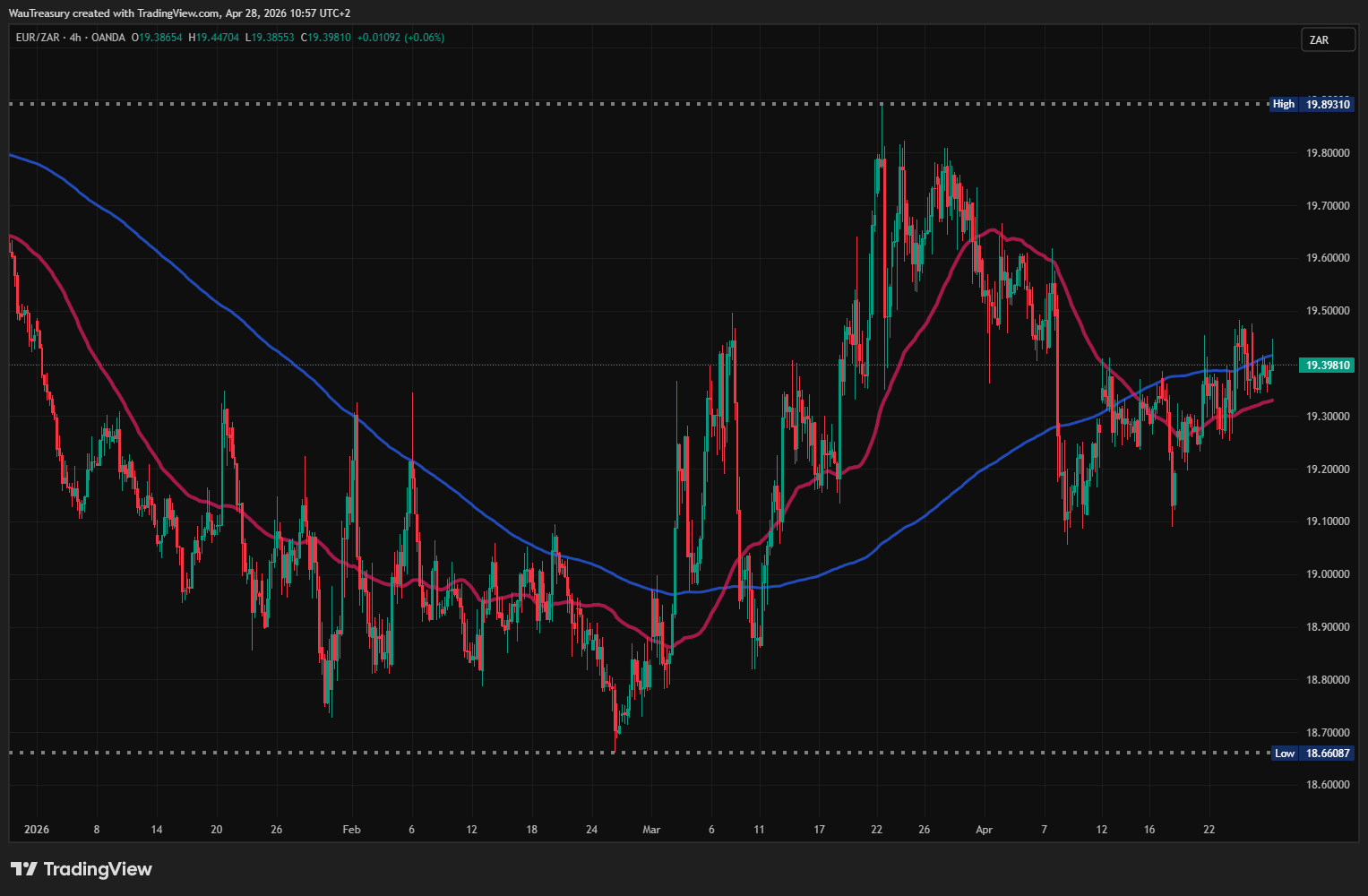
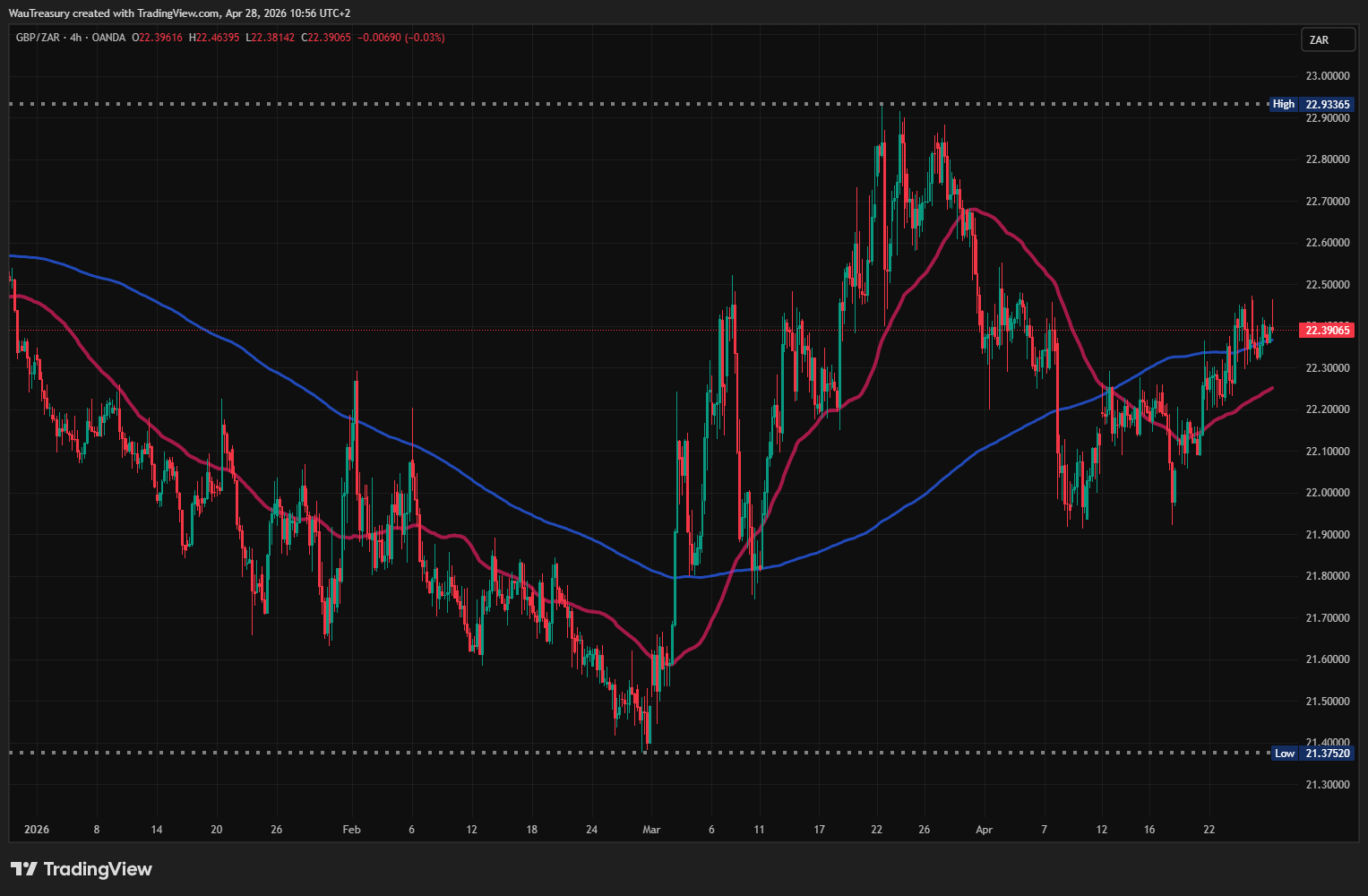
Cross-currency dynamics already reflect this underlying vulnerability. EUR/ZAR and GBP/ZAR remain elevated relative to earlier levels in the year, indicating persistent pressure on the rand beyond the USD leg.
EUR/ZAR: Euro Strength and Global Pressures Keep the USD Relatively on the Back Foot
GBP/ZAR: Sterling Resilience Adds to Potential Rand Weakness
From a technical perspective, USD/ZAR remains below key resistance levels, but the margin for stability is narrowing. A sustained move above the 16.60–16.75 range would signal a shift toward higher trading levels, potentially retesting levels seen earlier in the conflict.
Looking ahead, markets will remain highly sensitive to developments across three key areas: geopolitical outcomes in the Middle East, oil price direction, and central bank policy signals. The trajectory of US–Iran negotiations remains the primary near-term catalyst. Any escalation is likely to reinforce the oil risk premium and trigger renewed volatility across currency markets, while even a de-escalation scenario may offer only temporary relief.
At the same time, central bank policy remains in focus. With inflation risks elevated and growth uncertainty increasing, policymakers are likely to remain cautious. This reinforces the broader “higher-for-longer” rate environment, which tends to be less supportive for emerging market currencies.
In summary, while markets have demonstrated resilience in the face of ongoing geopolitical tension, the underlying macro environment is becoming less supportive. Elevated oil prices, fading commodity support, and persistent inflation risks collectively point to a more challenging outlook for the rand.
Short-term stability may persist, but the balance of risks remains skewed toward further weakness as these pressures continue to build.
