
Navigating Volatility: Managing FX Exposures in a Fractured Geopolitical Landscap
The first quarter of 2026 has delivered a stark demonstration of how rapidly geopolitical risk can reprice global financial markets and fundamentally shift the operating environment for local companies. The escalation of the conflict between the United States and Iran has sent persistent shockwaves through currency, commodity, bond and equity markets, creating a highly complex and unpredictable landscape for South African businesses. This volatility is severely compounded by the anticipation of surging fuel costs, which directly threatens to erode corporate profit margins, depress Return on Equity (ROE), and trigger a broad-based inflationary pulse across multiple domestic industries.
For South African importers and exporters, the stakes are highly elevated. The rand is currently navigating a period of severe pressure and trading with heightened levels of volatility, adding significant layers of complexity to corporate financial decision-making. The USD/ZAR recently breached the psychological R17.00 level again, providing a momentary tailwind for exporters but placing immense strain on importers’ procurement costs. The currency remains highly reactive and prone to sharp, corrective strengthening on any headlines suggesting even a temporary de-escalation in the Middle East.
With safe-haven flows providing a structural boost to the dollar and oil price shocks dominating the macroeconomic narrative, businesses must remain vigilant of shifting global bond yield spreads, the structural trajectory of the EUR/USD, and crucial divergences within South Africa’s export basket – particularly the widening gap between gold and platinum. This article aims to cut through the noise to unpack exactly how these compounding geopolitical shocks have impacted the ZAR against the USD, EUR, and GBP, and what strategic levers businesses can pull to protect their bottom line.
The Geopolitical Transmission Mechanism: What to Watch
The US-Iran conflict is not occurring in a vacuum; it is interacting with pre-existing global economic vulnerabilities and structural weaknesses within the South African energy landscape. For businesses managing currency risk, it is essential to look beyond the daily headlines and monitor the specific macroeconomic variables that dictate the underlying valuation of the South African Rand.
Global Oil and the Strait of Hormuz: A Structural Vulnerability
Brent crude’s surge is the most immediate threat to the South African economy, but the physical supply chain dynamics present an even graver risk. Following the closure and conversion of several domestic refineries into import terminals in recent years, South Africa now relies on imports for approximately 60% to 70% of its refined petroleum needs. This structural shift has moved the country from a model of ‘importing crude to refine’ to one of ‘importing finished product,’ significantly increasing our exposure to global supply chain bottlenecks and shipping disruptions in the Middle East.
Crucially, while our unrefined crude is largely sourced from West Africa (Nigeria and Angola), our refined fuel imports are heavily concentrated in the Middle East and Asia – specifically Oman, India, the UAE, and Saudi Arabia. This structural reliance on Gulf-based refining hubs places South Africa’s energy security directly at the mercy of the Strait of Hormuz, where any maritime disruption immediately translates into local supply anxiety.
With the current escalation, specifically the military actions on 28 February, throttling global fuel supplies, the risk premium on energy has become immense. It is not just the global price of Brent crude breaching $116.00 per barrel that impacts the local market; it is the physical disruption of primary fuel supply lines. As Gulf suppliers are forced to redirect shipments to avoid the conflict zone, the resulting logistical delays and soaring freight costs are passed directly to our shores.
The immediate local impact is staggering. Driven by massive international under-recoveries and the scheduled annual April levy increases, South African fuel prices are set for a “triple-shock” adjustment. This translates directly to a ballooning import bill and severe imported inflation. Local diesel is facing an estimated hike of R10.48 per litre, pushing inland wholesale prices to a record R28.81. Inland 95-octane petrol is expected to increase by R6.03, reaching around R26.27 per litre – effectively doubling the cost for vulnerable households just as the winter season approaches.
This creates extreme pressure on the consumer, ravages industrial profit margins and drives a rapidly deteriorating terms-of-trade dynamic that fundamentally weakens the ZAR from the inside out.
Brent Crude Oil (BCO/USD) – Daily Chart (Jan 2026 to Date)
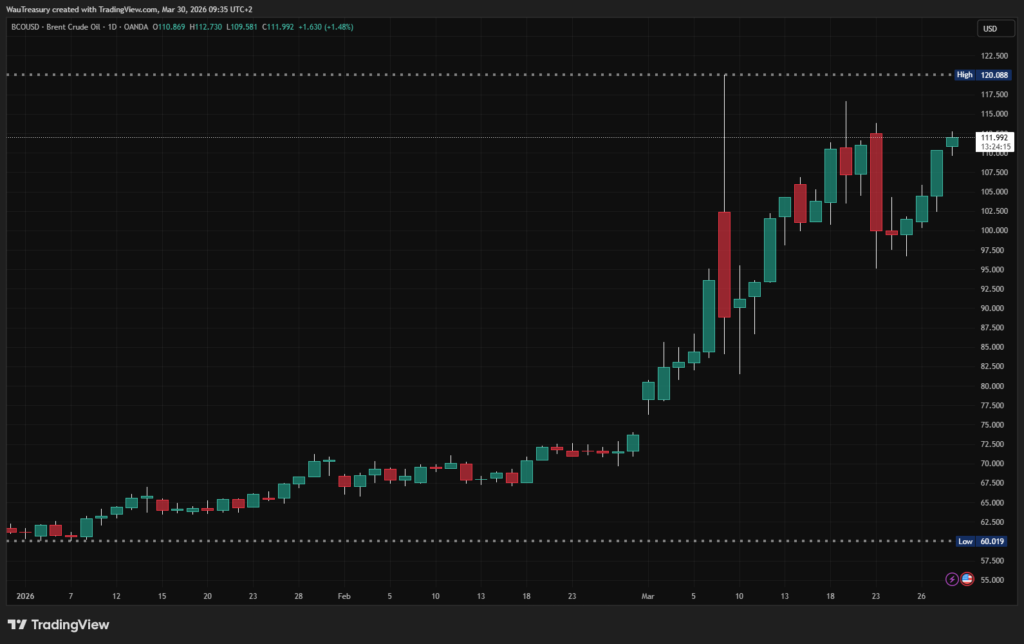
The sharp upward inflection highlights the immediate risk premium priced into global energy markets following the US-Iran escalation.
Precious Metals (Mainly Gold and Platinum)
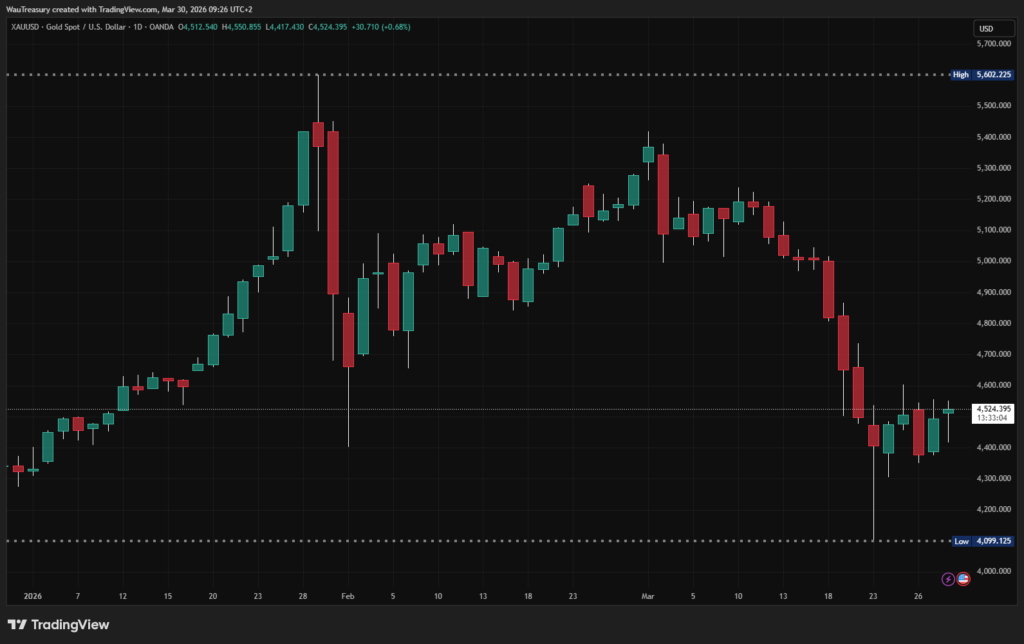
Traditionally, geopolitical distress triggers a flight to safety, benefiting gold. However, the dynamics for South Africa’s export basket are nuanced. While gold has seen safe-haven inflows, platinum group metals (PGMs) remain sensitive to global growth concerns and industrial demand. Monitoring the gold-to-platinum ratio provides leading indicators on the actual health of South Africa’s export revenues, rather than relying on broader emerging market sentiment.
Spot Gold (XAU/USD) – Daily Chart (Jan 2026 to Date)
Spot Platinum (XPT/USD) – Daily Chart (Jan 2026 to Date)
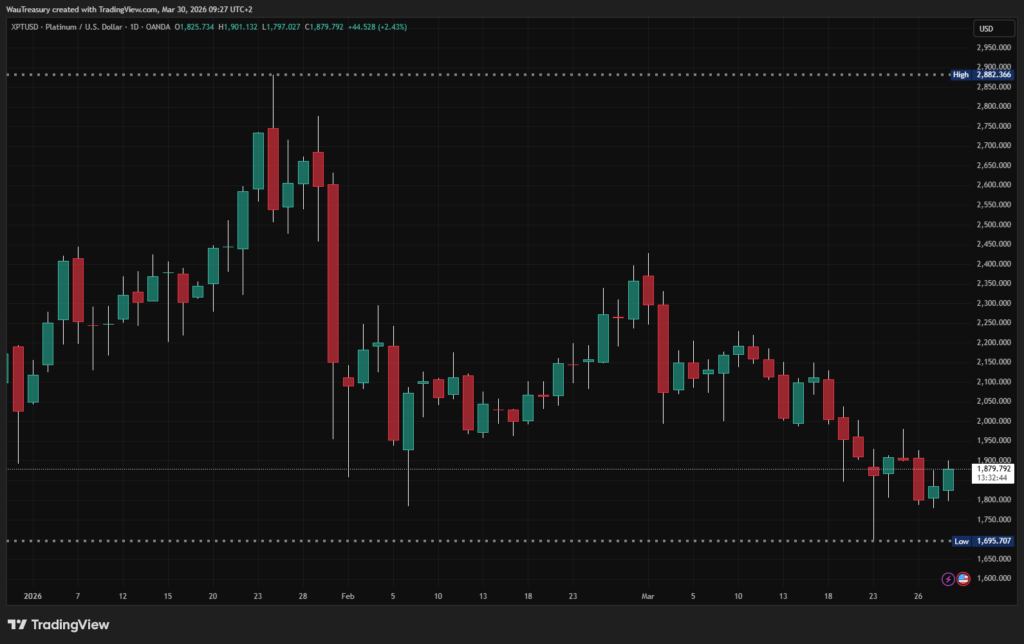
Gold vs. Platinum: The charts illustrate a dual threat to South Africa’s export basket. Since the war began on 28 February, Spot Gold (XAU/USD) has lost its traditional safe-haven status; surging oil prices and rising global bond yields have sharply diminished the appeal of non-yielding assets. Similarly, Spot Platinum (XPT/USD) remains sluggish, weighed down by its heavy reliance on an industrial and automotive sector threatened by the looming energy shock. For businesses, this confirms that both key export revenues are highly exposed to the current high-yield, oil-induced economic slowdown.
Cross-Currency Analysis: The ZAR in a High-Volatility Regime
The current risk-off environment has steepened the forward curves for both the USD/ZAR and EUR/ZAR, particularly on the long end as they approach the 12-month tenor. Conversely, while the GBP/ZAR forward curve is pricing slightly lower. There is a pronounced increase in implied volatility across all major ZAR crosses. This complex pricing dynamic is forcing businesses to actively reassess their baseline hedging assumptions for the quarter as well as the respective timelines.
USD/ZAR: The Epicenter of Risk
The US dollar is the ultimate beneficiary of the current uncertainty. Even with the US Federal Reserve facing its own complex inflation matrix, the liquidity and safety of US assets remain paramount. The USD/ZAR cross will continue to act as the primary local barometer for geopolitical stress, reacting aggressively to any military escalation or disruptions in global energy infrastructure.
USD/ZAR – Daily Chart (Jan 2026 to Date)
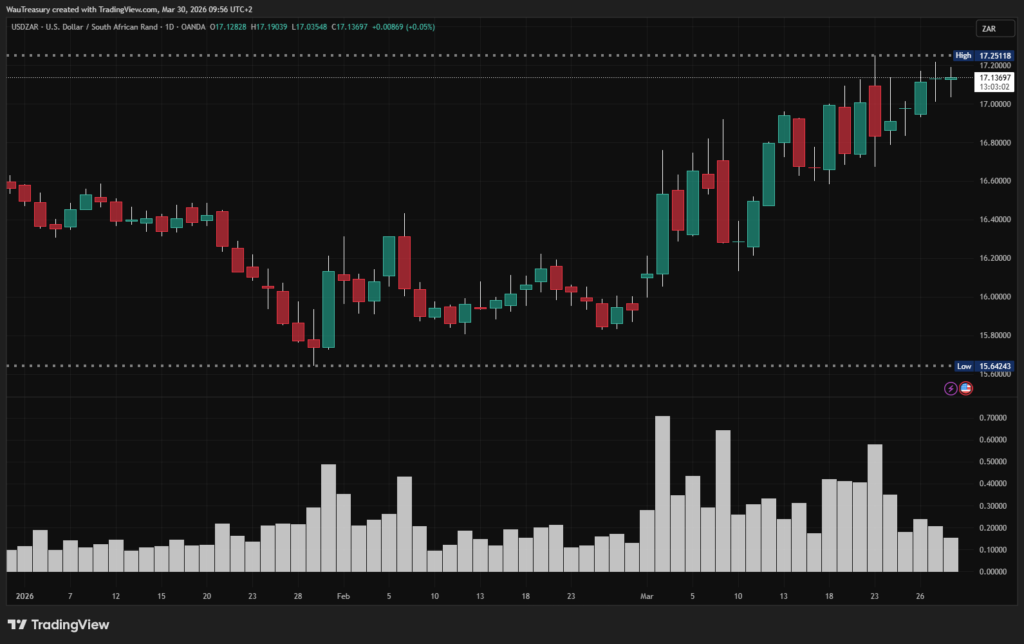
The USD/ZAR cross touched a recent high of 17.25 on March 23, driven by a surge in safe-haven demand. While we saw extreme intraday volatility earlier in the month, with daily swings exceeding 50 cents on three occasions. Price action has since moderated to a baseline of roughly 20 cents per day at this stage. However, the Rand remains exceptionally vulnerable to headline-driven shocks.
EUR/ZAR: The Cost of Energy Dependence
The euro presents a highly complex holding in the current environment. Unlike the US dollar, the single currency is not benefiting from safe-haven flows. Instead, Europe’s geographical proximity to the conflict and its acute historical vulnerability to energy supply shocks are actively weighing on its valuation. The structural economic damage of sustained high oil prices poses a direct and severe threat to Eurozone industrial output. As reflected in the chart, this dynamic has relatively suppressed the EUR/ZAR cross, keeping it moderately constrained versus the USD/ZAR, especially with the EUR/USD chart declining since the start of the year. Consequently, the cross is experiencing compressed levels of volatility versus that of the USD/ZAR.
EUR/ZAR – Daily Chart (Jan 2026 to Date)
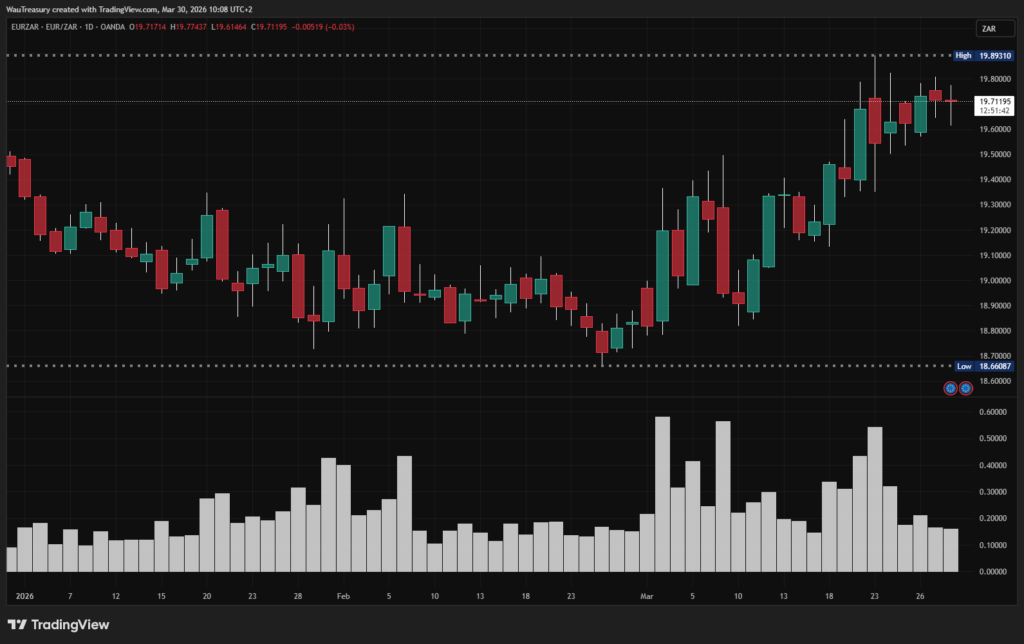
While the broader rand remains inherently weak, the chart above illustrates how severe European energy anxieties are dragging the EUR/USD lower, which in turn acts as a heavy anchor on the EUR/ZAR cross. The lack of aggressive topside breakouts – in stark contrast to the USD/ZAR – highlights the euro’s current fundamental fragility.
GBP/ZAR: Yield and Fiscal Focus
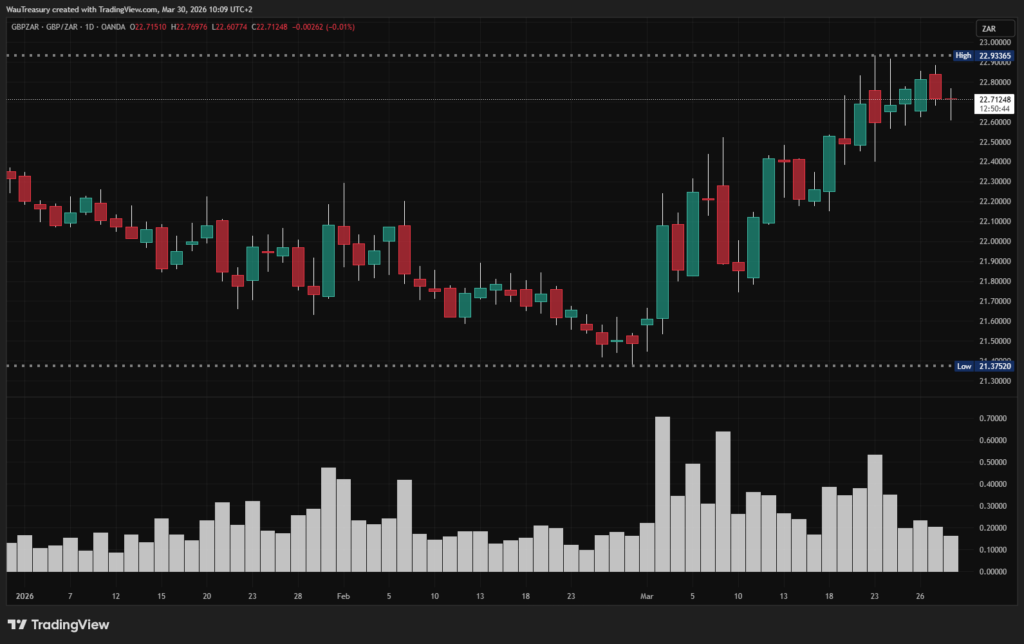
The Bank of England’s interest rate path and the UK’s domestic fiscal outlook are currently competing with global risk sentiment. However, the pound continues to catch a significant tailwind against the ZAR, carried upward primarily by broader emerging market fragility and the relentless dollar-driven risk-off environment rather than specific UK economic outperformance. This dynamic has propelled the cross to highly elevated levels, aggressively breaking through the 22.50 resistance zone to trade near 22.86.
GBP/ZAR – Daily Chart (Jan 2026 to Date)
With rising forward cover costs on far-tenor FECs, rigid execution is becoming prohibitively expensive for importers. To protect operating margins and optimize working capital, businesses should shift toward a more agile framework:
- Stress-Test Exposures: Move away from single-point forecasts. Model how margins would hold up under a sustained ZAR blowout to 17.50 or 18.00 versus a sharp, headline-driven recovery to ensure the business is not caught off guard by tail-risk events.
- Formalise an FX Policy: With intraday swings routinely exceeding 20 cents, ad-hoc hedging is no longer viable. A formalised FX Risk Management Policy removes emotion from the dealing desk and establishes the strict parameters necessary to maintain commercial certainty.
The convergence of Middle Eastern geopolitical tension, surging energy costs, and emerging market fragility presents a harsh landscape for South African businesses. However, by anchoring decisions in key transmission variables – such as oil prices and yield spreads – your business can navigate this uncertainty. In an unforgiving market, disciplined risk management and execution agility are your most effective safeguards.
If you’d like to better understand your FX exposure or strengthen your risk management approach, connect with David du Plessis at dduplessis@wauko.com or Karel van Niekerk kvanniekerk@wauko.com.


