
Warsh Did Not Promise a September Hike, but Markets Are Pricing One Anyway
Introduction
The Federal Reserve’s September interest-rate decision has quickly become one of the most important events for global currency markets. Kevin Warsh’s Jackson Hole address did not provide the explicit policy guidance many investors had hoped for, but it reinforced the Fed’s concern that inflation remains too high and that its 2% target remains non-negotiable.
Markets responded by sharply increasing the probability of a September rate hike, while the dollar and short-term US Treasury yields moved higher. The rand has also come under pressure following Warsh’s speech.
For South African businesses, this matters because changes in US interest-rate expectations influence the dollar, global bond yields, commodity prices and demand for emerging-market assets. With important employment and inflation data still due before the Fed meets, expectations could shift materially again.
The question is therefore not simply whether the Fed hikes in September, but how markets price that probability and what it means for the dollar and, ultimately, the rand.
Getting Up to Speed
Last month, we examined an unusual Federal Reserve meeting. The Fed left rates unchanged, yet longer-dated Treasury yields rose as investors questioned whether delaying further tightening could allow inflation to remain elevated for longer. In effect, the Fed held rates, but markets tightened financial conditions on its behalf.
A month later, attention has shifted firmly towards September.
Warsh’s first Jackson Hole address did not contain an explicit commitment to raise interest rates. In fact, he again rejected the type of forward guidance that tells investors exactly what the Fed intends to do next.Nevertheless, markets heard something important.
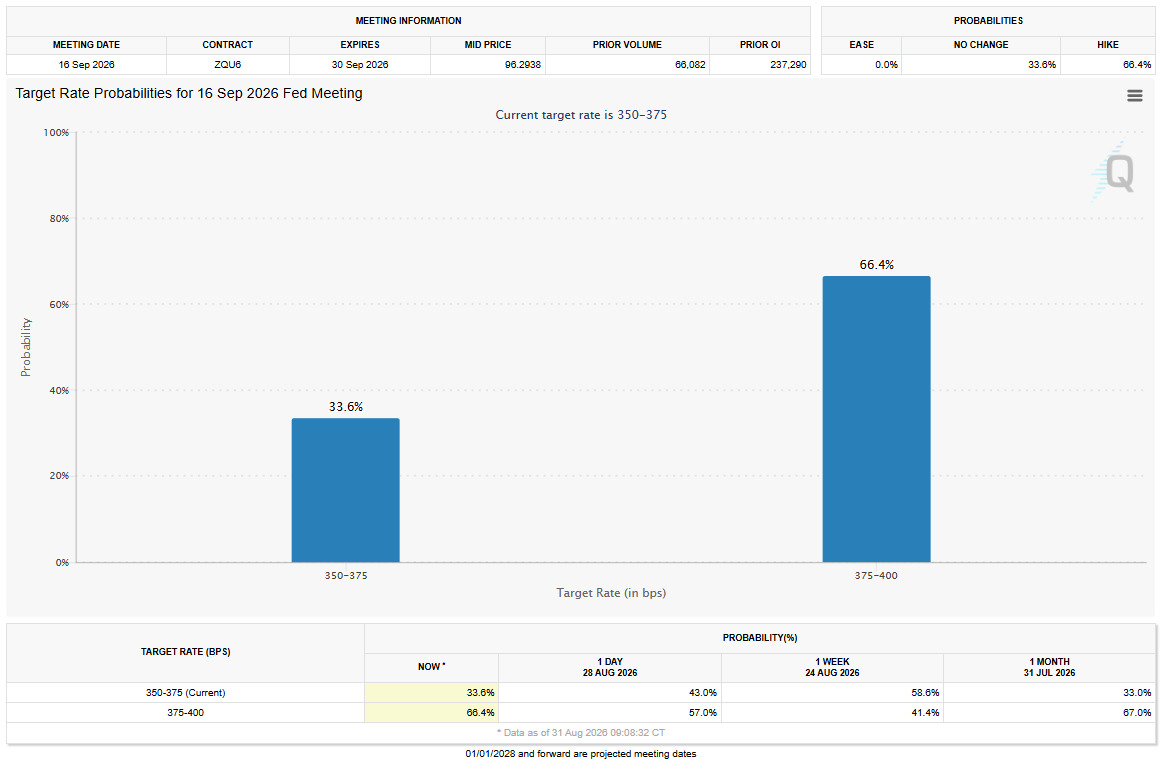
According to CME FedWatch, the probability of a 25-basis-point increase at the Fed’s September meeting was only around 40% shortly before Jackson Hole. It jumped to approximately 57% following Warsh’s speech and has since climbed to around 66% at the time of writing. This implies that markets now consider a move in the Fed funds target range from 3.50%–3.75% to 3.75%–4.00% the more likely outcome.
Figure 1: Market-implied probabilities for the September 2026 FOMC meeting
Source: CME FedWatch, 31 August 2026.
The important question is therefore not whether Warsh promised a hike. He did not. It is why investors became substantially more convinced that one is coming.
Warsh Gave Markets a Framework, Not a Forecast
One of the clearest messages from Jackson Hole was that Warsh intends to run the Federal Reserve differently.
He argued that forward guidance should play a smaller role during normal economic conditions. In his view, excessive guidance can distort the relationship between financial markets and the central bank. If investors constantly wait for the Fed to tell them what happens next, while the Fed simultaneously looks to financial markets for information, both risk responding to each other instead of the underlying economy.
This means investors should not expect Warsh to announce months in advance whether interest rates will rise or fall. That helps explain the sharp swings in market-implied rate probabilities and broader asset-price volatility, as investors continuously reassess the interest-rate outlook when new information arrives.
Instead, Warsh wants markets to focus on inflation, employment, financial conditions, credit, commodities and the broader economy.
Jackson Hole therefore provided less clarity about what the Fed will do, but considerably more clarity about what will influence its decision.
And when it came to inflation, the message was difficult to interpret as dovish.
Why September Now Looks More Hawkish
Warsh described the Fed’s 2% PCE inflation objective as a “firm, fixed target” and reiterated that short-term interest rates remain its primary monetary-policy tool. His assessment of the economy also provided relatively little justification for easier policy.
Economic activity has remained resilient, business investment is strong and financial conditions show limited evidence of being excessively restrictive. The US labour market also remains comparatively healthy, with unemployment around 4.1% and Warsh describing employment conditions as broadly consistent with full employment.
He noted that Inflation is the problem.
PCE inflation remains at 3.7% y/y, materially above target, while Warsh noted that the six-month pace is running even higher. More than half of the individual components within the PCE basket have experienced price increases above 3% over the past year.
His standard was clear: the Fed must be confident that inflation is returning towards 2% clearly and at sufficient speed. Otherwise, policymakers still have “work to do”. That language helps explain why markets repriced September so aggressively.
The move has nevertheless been far from straightforward. The probability of a September hike stood around 67% at the end of July, fell towards 33% during August, and has now returned towards the mid-60s following Jackson Hole.
This volatility demonstrates how quickly expectations can change when the Fed provides less forward guidance.
Before Jackson Hole, investors were largely asking: what would convince the Fed to hike? After Warsh’s speech, the question has increasingly become: what data would be weak enough to stop it?
What Does This Mean for the Dollar?
Higher US interest-rate expectations would normally support the dollar.
If US yields rise relative to those available elsewhere, dollar-denominated assets become more attractive. This can increase demand for the currency, particularly when investors can earn higher returns without taking emerging-market risk.
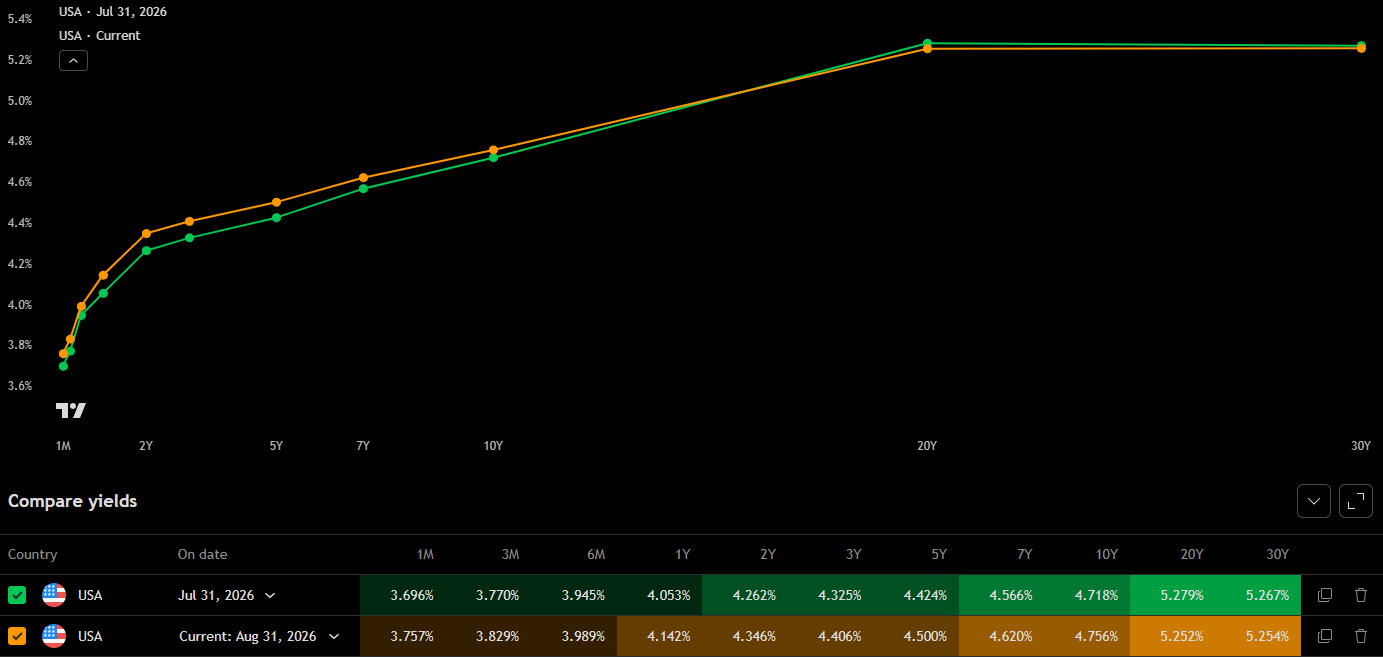
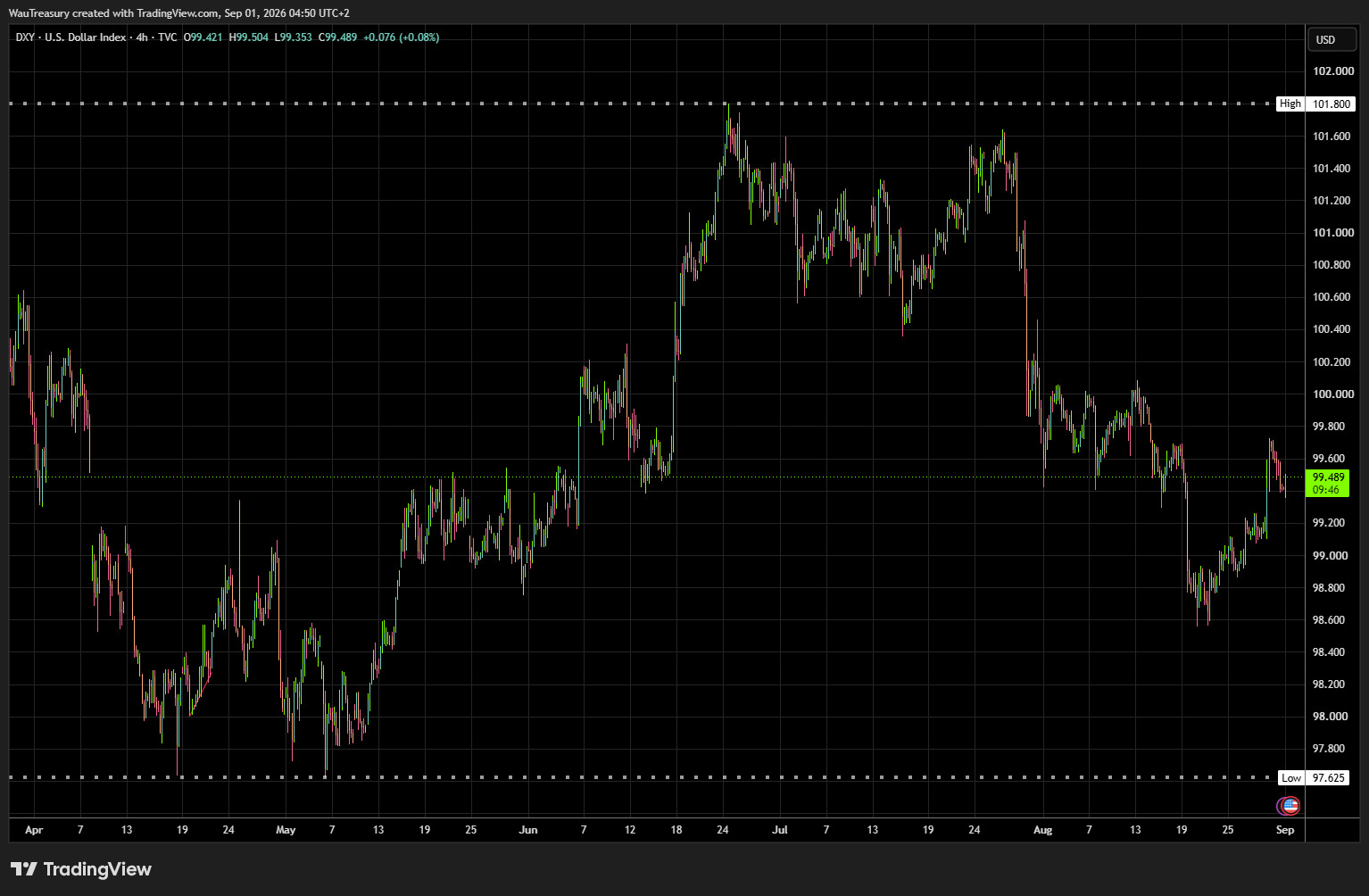
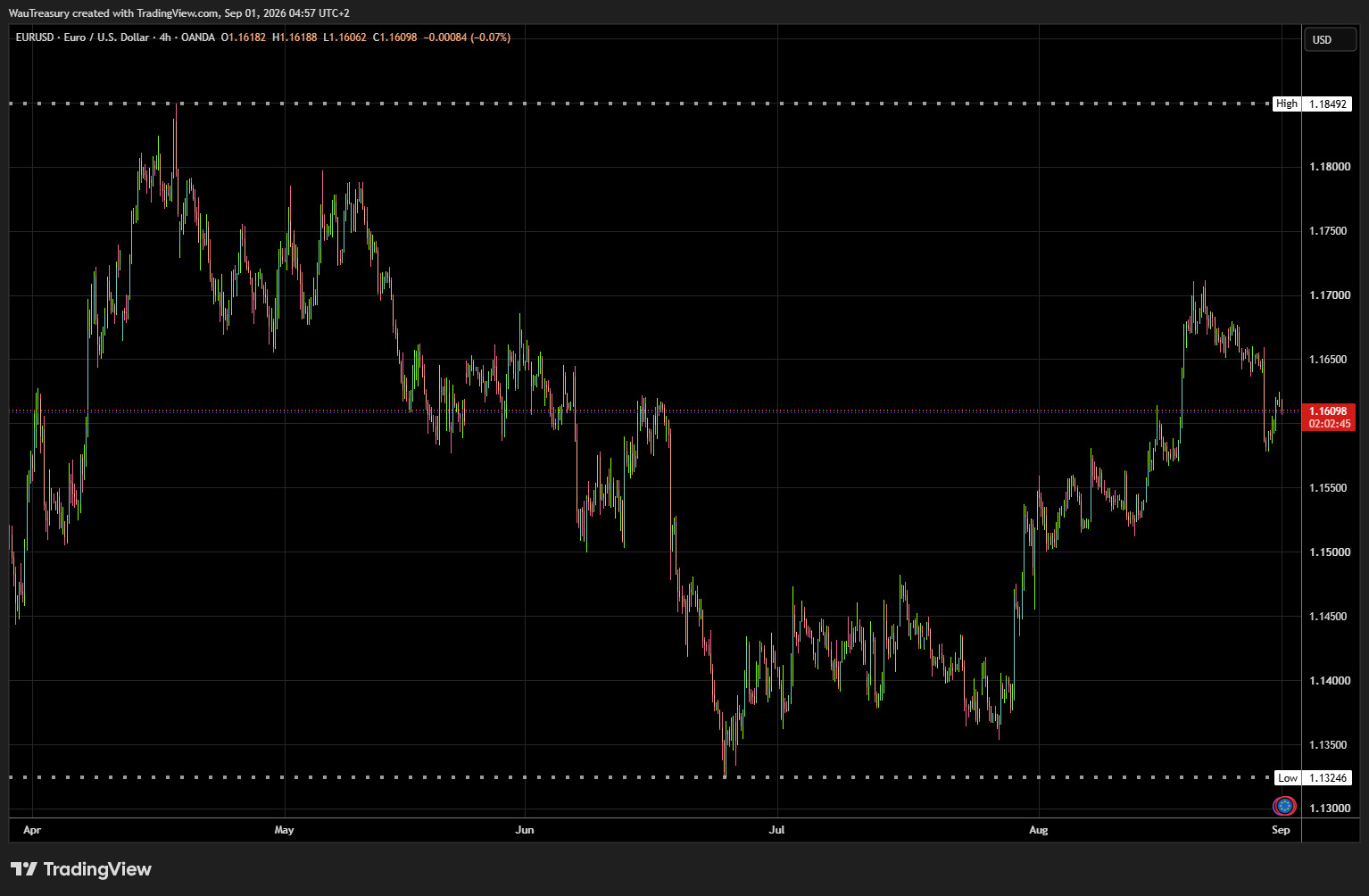
That mechanism was visible following Jackson Hole. September hike expectations increased, short-term Treasury yields moved higher and the DXY recovered towards 99.5, while EUR/USD retreated towards 1.16.
US Yield Curve – Current versus 31 July 2026
DXY Index as of 01 September 2026
EURUSD Index as of 01 September 2026
The dollar has struggled to break decisively higher in recent times. The DXY remains below the important 100 level, suggesting that another Fed hike is only one part of the story.
The dollar is currently being pulled in two directions. Higher Fed rates are supportive, but concerns around US government borrowing, Treasury-market intervention and longer-term fiscal credibility remain headwinds.
This reinforces a point from last month’s article: why Treasury yields are rising matters as much as the fact that they are rising.
Higher yields generated by stronger economic growth are normally constructive for the dollar. Higher yields resulting from persistent inflation, fiscal concerns or a growing risk premium are less straightforward.
The Data Will Decide September
Despite the stronger market conviction following Jackson Hole, a September hike is not guaranteed. Warsh specifically emphasised that the Fed should focus on economic trends rather than individual data releases.
That makes the upcoming US employment and inflation releases particularly important.
Strong labour data combined with another elevated inflation print would reinforce the case for tightening and could push the market-implied probability of a hike even higher.
Conversely, a meaningful deterioration in employment or convincing evidence that inflation is moderating could quickly reduce those expectations again.
The current probability of roughly 66% should therefore not be treated as a forecast. It represents the market’s assessment based on the information available today. As August demonstrated, that assessment can change rapidly.
Three Possible Outcomes
There are essentially three scenarios for September.
A 25-basis-point hike accompanied by firm economic data would probably provide the clearest support for the dollar. US yields would remain elevated, the interest-rate advantage of dollar assets would improve and a sustained move in the DXY above 100 would become more plausible.
If the Fed remains on hold because inflation improves, short-term yields would likely fall and the dollar could come under renewed pressure as markets push tightening expectations further into the future.
The most complicated outcome would be persistent inflation combined with another Fed hold. The dollar could initially weaken as hike expectations are removed, but longer-term Treasury yields could rise if investors again question the Fed’s willingness to control inflation.
That could produce the same uncomfortable environment discussed last month: a weaker dollar alongside tighter global financial conditions.
What Does This Mean for the Rand?
For South African businesses, the September decision matters because a stronger dollar and higher US yields reduce the relative attractiveness of holding higher-yielding emerging-market currencies.
That can place upward pressure on USD/ZAR.
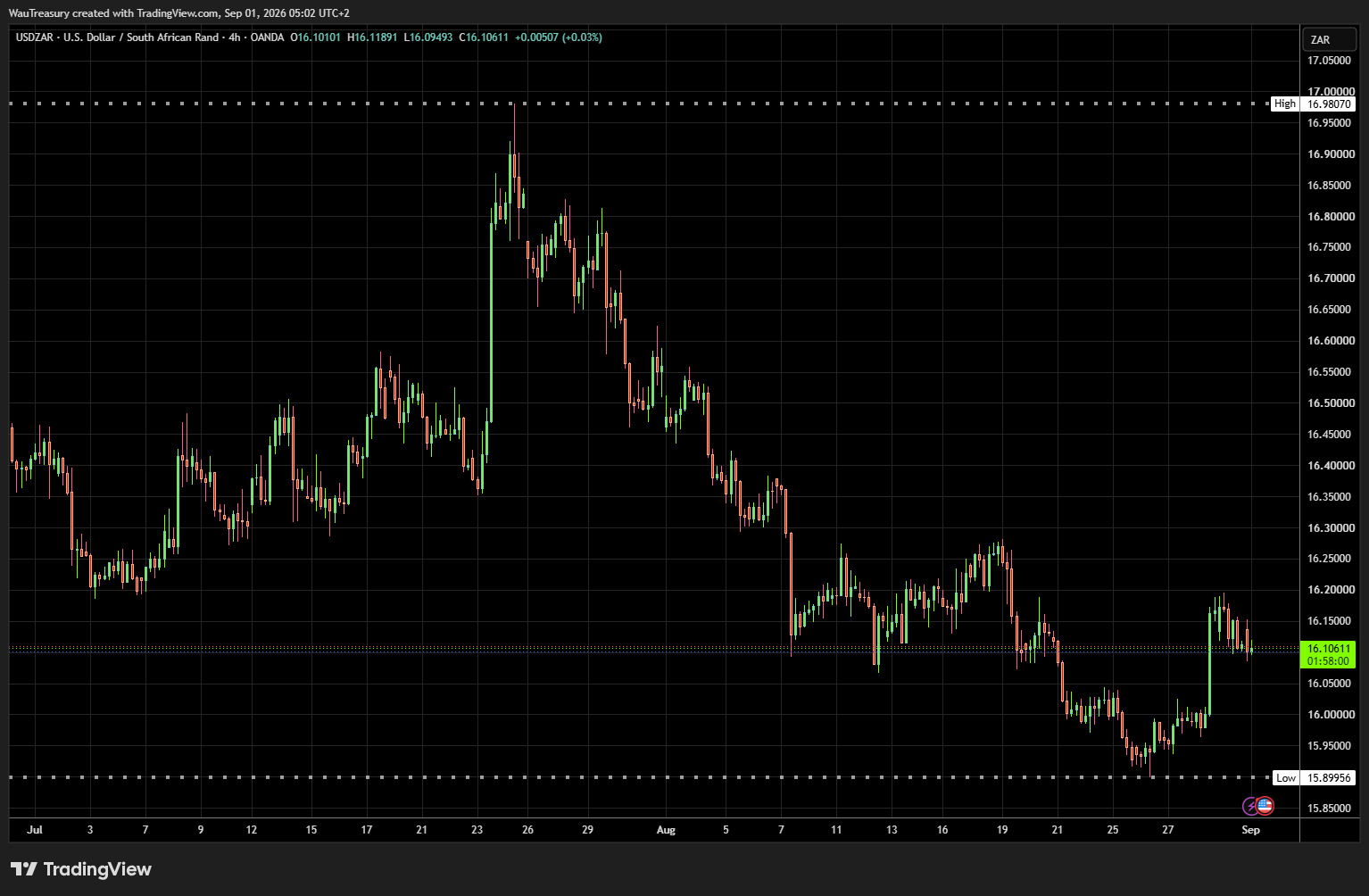
The post-Jackson Hole reaction already provides an example. As Fed tightening expectations rose, the dollar recovered and the rand moved from levels around 15.90 to above 16.10.
USDZAR as of 01 September 2026
However, US rates are not the rand’s only driver.
Oil, gold, platinum, global risk appetite and domestic fundamentals will continue to influence the currency. A Fed hike accompanied by lower oil prices and strong South African commodity exports could have a very different effect from a hike occurring alongside another global energy shock.
Similarly, a weaker dollar does not automatically guarantee rand strength if that weakness reflects deteriorating confidence in US financial markets and rising global risk aversion.
The underlying reason for the currency move therefore remains critical.
The Bottom Line
Jackson Hole did not provide the explicit forward guidance investors may have expected. Instead, Warsh made his priorities clearer.
The US economy remains resilient, the labour market remains relatively stable and financial conditions do not appear especially restrictive. Inflation, however, remains materially above target.
Markets have responded by lifting the probability of a September hike from around 40% before Jackson Hole to approximately 66% today, supporting both the dollar and short-term Treasury yields.
But September remains open.
Upcoming employment and inflation data could materially alter expectations again. And with Warsh deliberately reducing the Fed’s reliance on forward guidance, volatility around individual economic releases is likely to remain elevated.
For corporate treasurers, the lesson is straightforward. The probability of a September hike has moved from roughly 67% to 33% and back above 60% within a matter of weeks.
If markets can change their minds that quickly, businesses should be cautious about building FX decisions around a single expected outcome.
Progressive hedging within an approved FX policy remains more reliable than trying to predict exactly what the Federal Reserve will do next.
