
The outlook for the United States economy has shifted notably in recent months, with signs of slowing growth and a weakening labour market raising questions about the sustainability of the current expansion. According to BCA Research’s September 2025 report, these developments carry important implications for global currency markets, particularly as the Federal Reserve faces mounting pressure to adjust policy. This report unpacks the forces reshaping the US economy – from slowing growth and labour market strains to policy uncertainty – and examines how these dynamics may steer the dollar’s trajectory in the months ahead.
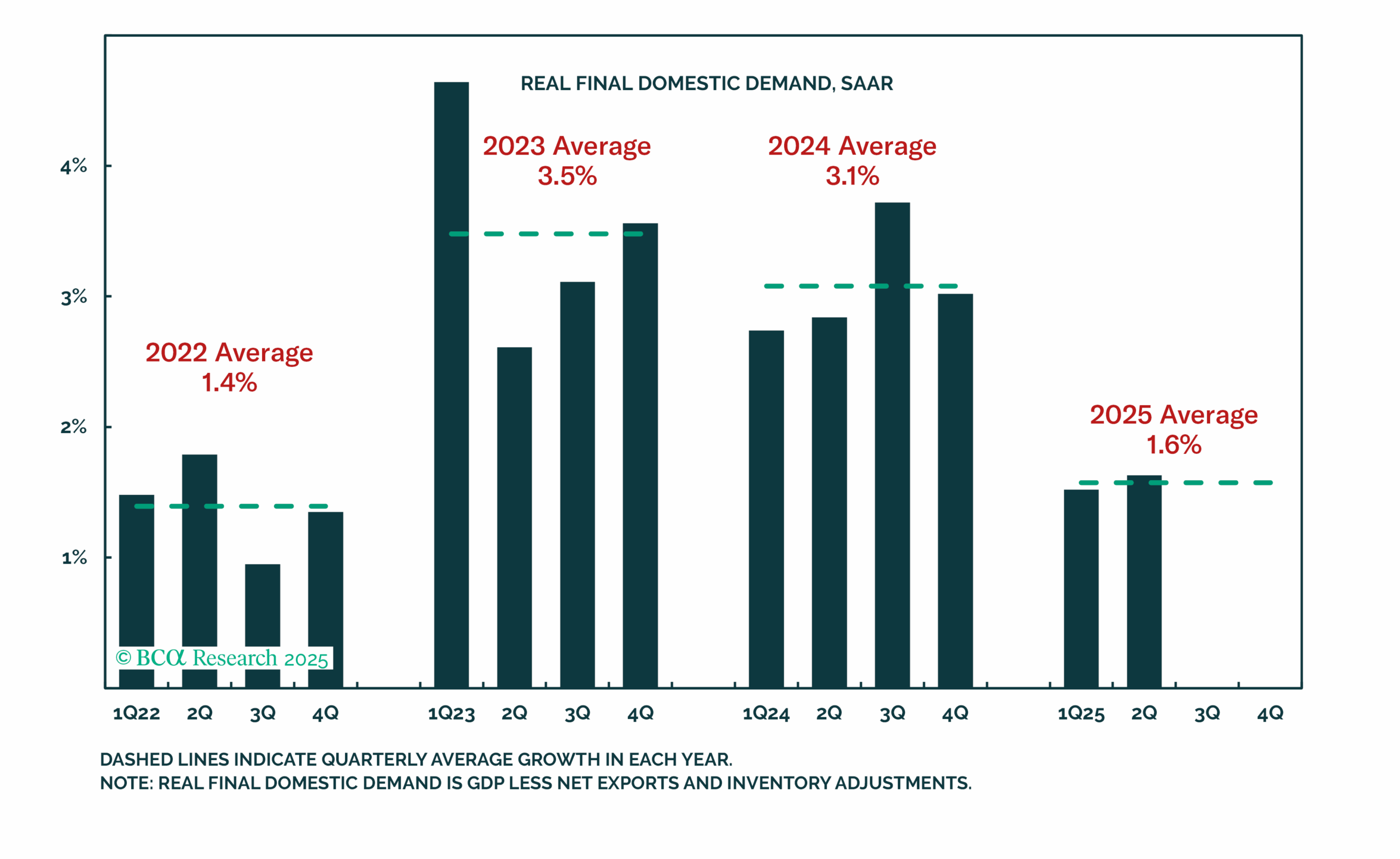
The United States economy is entering the second half of the year under mounting pressure. After two years of robust growth, momentum has slowed sharply. Real final domestic demand – a key measure of underlying activity – expanded at an annualised pace of just 1.5% in the first quarter and 1.6% in the second. This is a stark contrast to the 3% growth rates seen in 2023 and 2024 and brings the economy close to stall speed, a level historically associated with rising recession risk. The primary drag has been weak consumption, which averaged only 1% in the first half of the year as households faced high borrowing costs, depleted savings, and growing uncertainty.
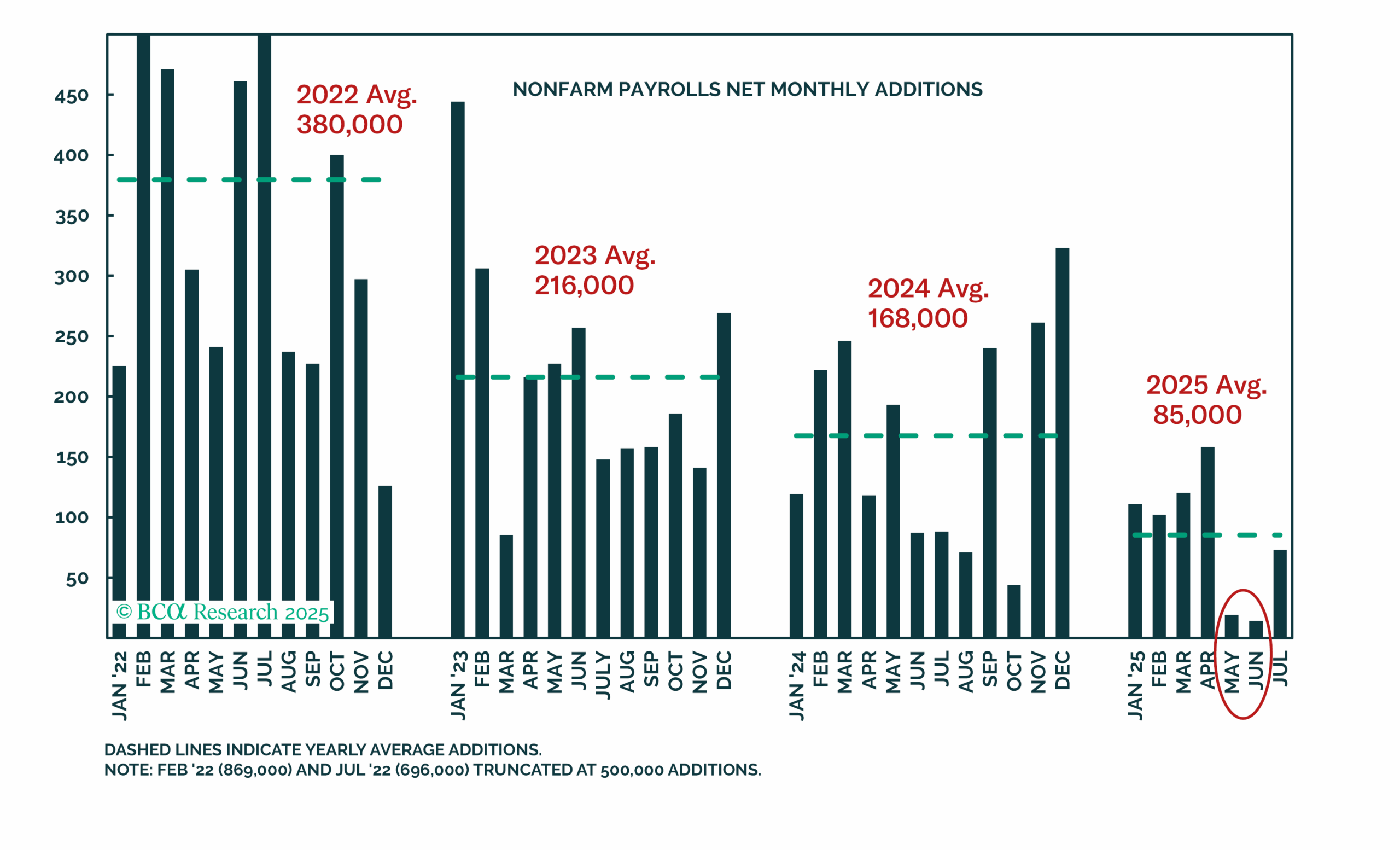
The U.S. labour market, long a source of resilience, is also showing signs of fatigue. Non-farm payroll growth has slowed dramatically, averaging just 85,000 jobs per month in 2025 compared to 168,000 in 2024. July’s employment report revealed downward revisions to May and June, cutting 258,000 jobs from earlier estimates and leaving the three-month average at a meagre 35,000. Year-on-year payroll growth has now slipped below 1%, a threshold that has historically coincided with recessions. Moreover, job gains have been highly concentrated in health care and education, sectors less sensitive to the business cycle.
Without these, payrolls would have contracted for three consecutive months. For currency markets, this weakening labour backdrop strengthens the case for Federal Reserve rate cuts, which could weigh on the US dollar if policy easing accelerates.
Wage dynamics offer little comfort. While hospital jobs pay roughly 28% more than the national average, social assistance roles—another major source of hiring—pay significantly less. Overall, the new jobs added this year generate only about 94% of the average job’s pay, limiting their ability to drive robust consumption. This suggests subdued inflationary pressures ahead, reinforcing expectations for monetary easing and adding to the downward bias for the dollar over the medium term.
Inflation trends have moderated, but not uniformly. Core inflation remains above the Fed’s 2% target, yet the disinflationary impulse from slowing demand is becoming more evident. If this persists, the Fed will have greater scope to cut rates later this year. At the time of writing, the CME Group’s FedWatch Tool indicates that markets are pricing in an 88% probability of a 25-basis-point rate cut by the Federal Reserve on 17 September 2025, with expectations for further easing rising to 94% for October and 99% for December. For FX markets, the timing and magnitude of these cuts relative to other central banks—particularly the ECB and BOJ – will be critical in determining USD direction. A faster Fed pivot would likely narrow yield differentials and weaken the dollar, while a cautious approach could keep it supported in the near term. On the face of it, at this stage, it is safe to say the market is pricing in a strong path of interest rate cuts for the remainder of 2025, where lower rates are priced in for the majority of U.S. assets – which emphasises the weaker USD against other major currencies
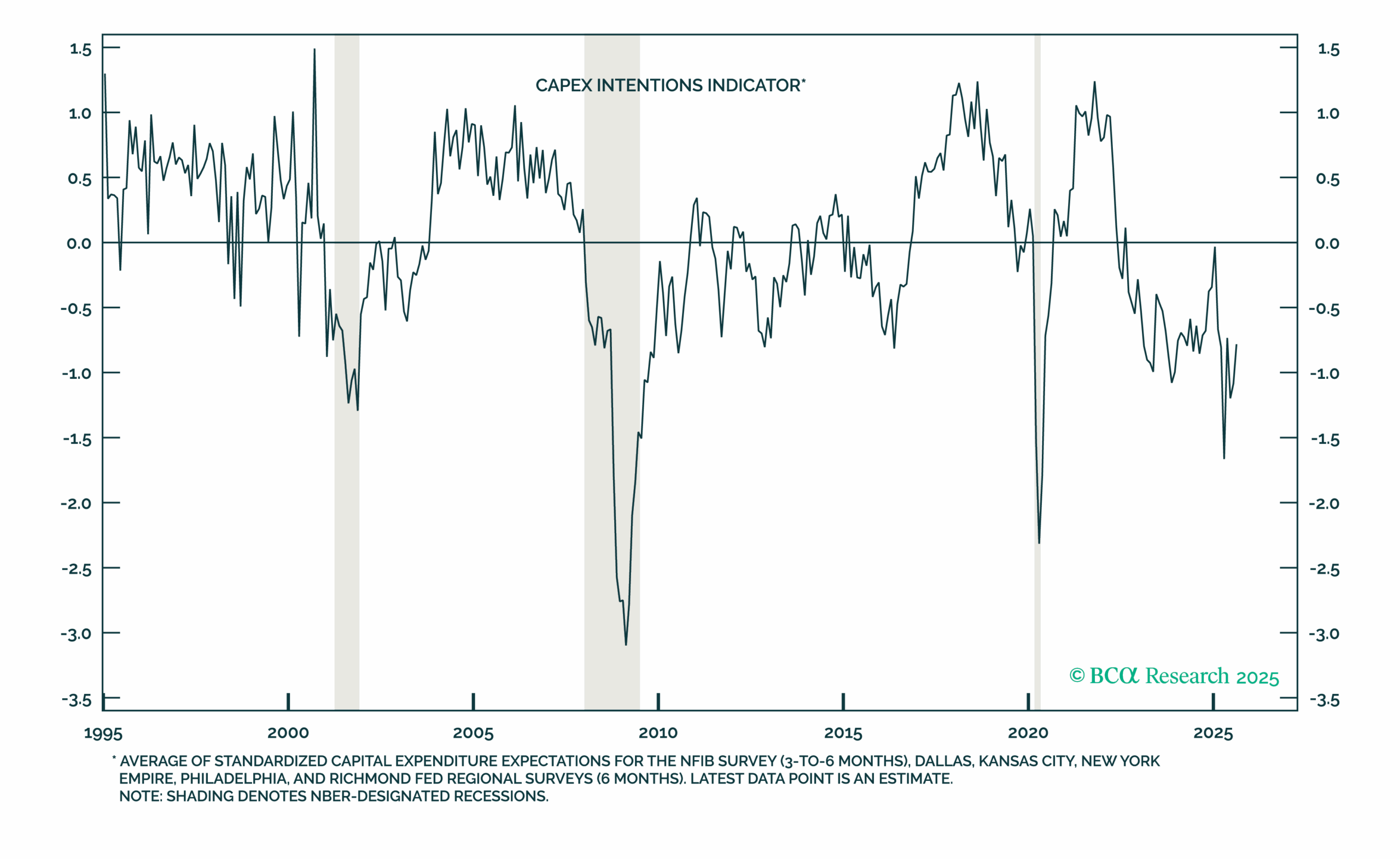
According to BCA Research, business investment is another weak spot for the U.S. – Despite the Trump Administration bolstering about strong investment into the world’s largest economy. Capital expenditure intentions remain near the bottom of their typical expansion range, reflecting persistent uncertainty around tariffs and trade policy. Despite a temporary pause in the so-called “Liberation Day” tariffs, businesses appear to remain hesitant and / or cautious to commit capital. This hesitation matters because investment not only drives near-term demand but also underpins long-term productivity growth. For FX markets, prolonged weakness in investment signals softer growth prospects, which could erode the dollar’s strength over time. On the other hand, this boosts foreign demand for U.S. exports, however one should analyse the overall impact over time as tariff impact prices of U.S. goods and services.
BCA also noted that financial conditions have tightened modestly, with credit spreads widening and lending standards becoming more restrictive. While not yet at crisis levels, this trend suggests that liquidity is becoming scarcer, which can amplify economic weakness. Historically, tighter financial conditions have supported the USD in the short term as global investors seek safety, but over time, they tend to weigh on growth and reduce the currency’s appeal.
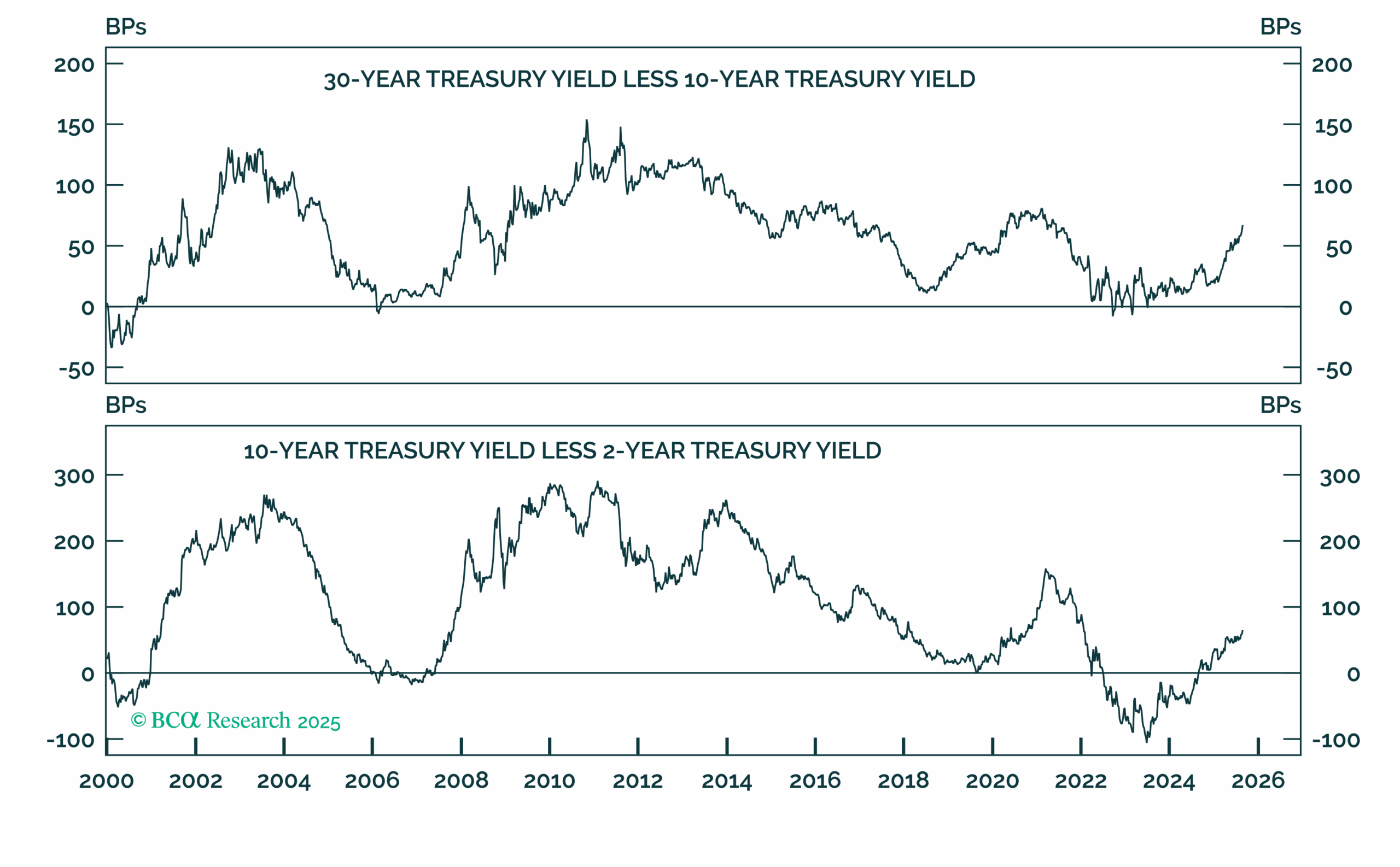
Monetary policy remains in sharp focus. The Federal Reserve faces mounting political pressure, with attempts to influence its decisions making headlines globally. While the Fed has historically resisted such interference, the current campaign is unusually overt. A politicised Fed could prioritise employment over price stability, potentially leading to higher long-term inflation expectations and a structurally steeper yield curve. If markets perceive the Fed as less committed to its inflation mandate, the dollar could weaken as risk premiums rise. For now, bond markets have reacted calmly, but the risk of a credibility shock cannot be ignored.
External dynamics add another layer of complexity. The US remains a relatively closed economy, but tariffs act as a tax on imports, raising costs for businesses and consumers. Meanwhile, China’s shrinking import demand and rising exports are exporting deflation globally, pressuring US manufacturers and complicating trade flows. These forces could sustain safe-haven demand for the dollar in the short term, even as domestic fundamentals point toward eventual weakness.
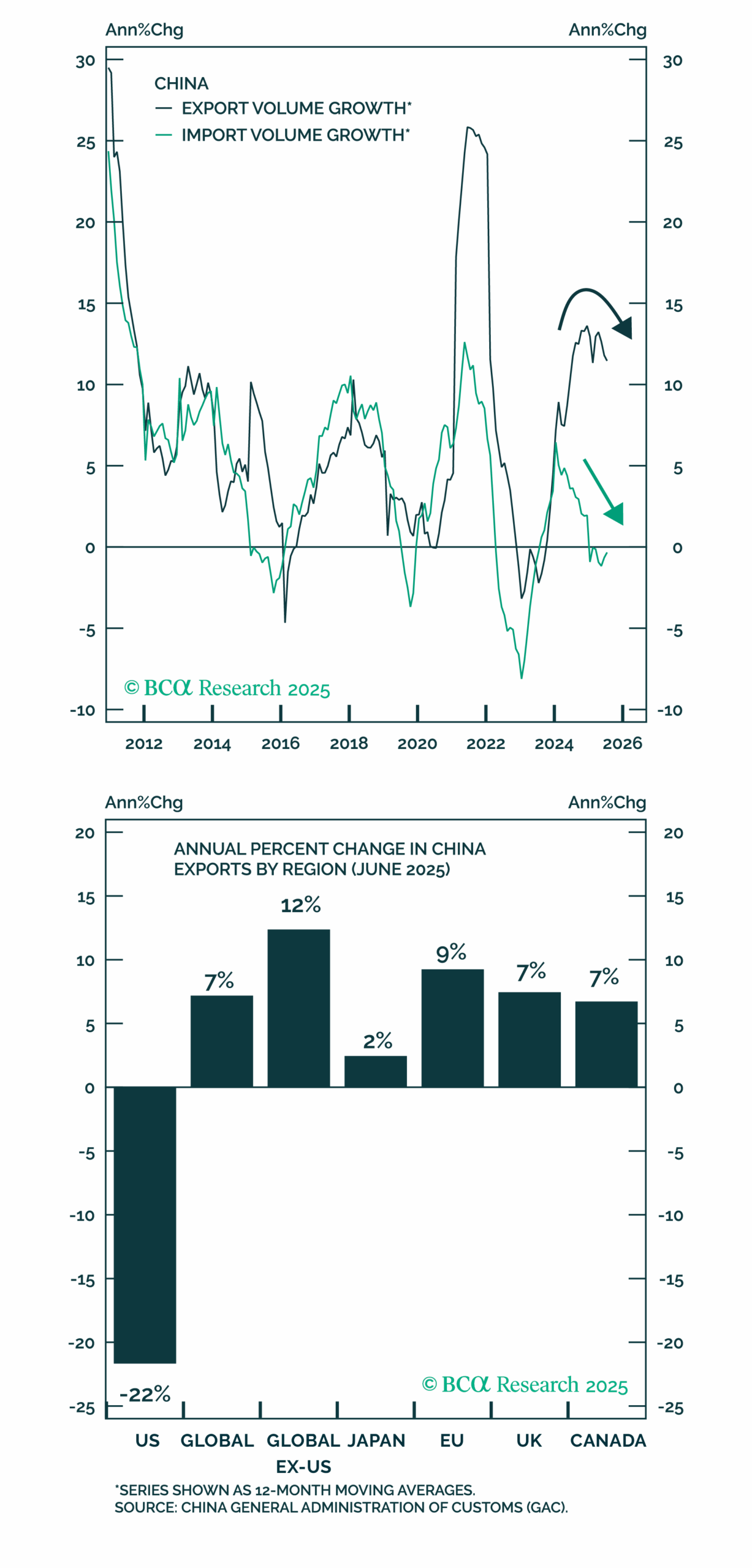
For currency markets, the dollar now sits at the intersection of competing forces. On one hand, slowing growth, a weakening labour market, and the prospect of Fed easing argue for a softer greenback. On the other, global uncertainty and deflationary shocks from China could keep the dollar supported as investors seek safety. For now, the bias is toward near-term resilience, particularly against cyclical and emerging market currencies. The USD/ZAR has benefitted from a softer USD, especially after the dust settle from 2 April 2025 when U.S. President Trump announced tariffs on the so-called “Liberation Day”. Should the Federal Reserve pivot aggressively for the remainder of the year, the dollar could face a more pronounced decline later in the year.
The United States economy is clearly at an inflection point. Slowing growth, a weakening labour market, and subdued inflation pressures are converging at a time when the Federal Reserve faces both political scrutiny and market expectations for aggressive easing. While these factors point to a softer dollar over the medium term, the near-term outlook remains complicated by global uncertainty and safe-haven flows, particularly as China’s deflationary export push and ongoing trade tensions weigh on sentiment.
For currency markets, this means volatility is likely to remain elevated. The dollar’s trajectory will hinge on the pace and scale of Fed rate cuts relative to other major central banks, as well as the market’s confidence in the Fed’s independence. A faster pivot could see the greenback lose ground against the euro and yen, while emerging market currencies, like the South African Rand, may benefit if global liquidity improves – Assuming local conditions remain at bay. Conversely, any delay in easing or renewed geopolitical shocks could keep the dollar supported in the short run.
For now, the message is clear: the era of one-way bets on a strong dollar is likely over for now. Traders continue to prepare for a more dynamic environment where policy signals, economic data, and political developments drive sharp moves across currency pairs. Staying nimble, hedging appropriately, and monitoring Fed communication will be critical as the second half of 2025 unfolds.
In volatile markets, a proactive currency strategy is your strongest line of defence.
If your business is exposed to foreign exchange risk, now is the ideal time to reassess your approach. With global markets reacting to shifting economic data, geopolitical developments, and general risk-sentiment, having a clear and responsive currency risk framework is more important than ever. For further insights and tailored solutions, feel free to get in touch with David du Plessis at dduplessis@wauko.com or Evan May at emay@wauko.com.


